



What it costs
The real price of becoming a notary.
The class is the smallest part of the bill. Here is every cost, and who gets each payment.
Enroll now for $79 →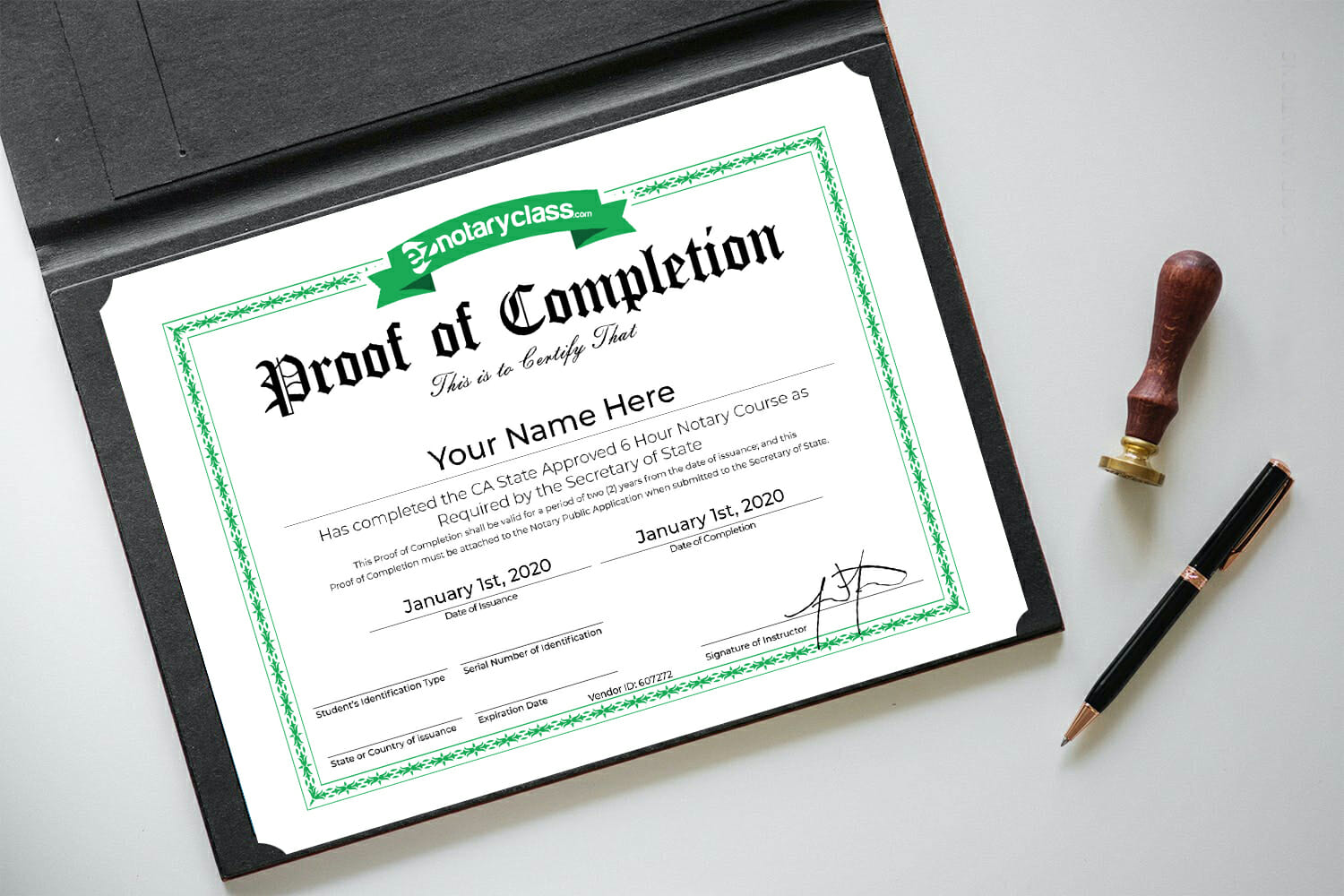
The full cost, item by item
| Item | Typical cost | Paid to |
|---|---|---|
| 6-hour notary class | $40–$199 | Approved education vendor |
| State exam fee | $40 | Secretary of State |
| Live Scan fingerprinting | $60–$80 | Live Scan operator |
| $15,000 surety bond | $38–$50 | Bond company |
| County clerk filing | $20–$40 | Your county |
| Notary seal and journal | $35–$60 | Supplier |
| Errors & omissions insurance | Optional | Insurer |
Realistic total: $270 to $470 depending mainly on which class you take. Most of it is state and county fees that nobody can discount.
Why class prices vary so much
Every approved vendor teaches the same required six hours, so a $199 course is not teaching you more law than a $79 one. The price difference reflects delivery and what is bundled: classroom time costs more than video, and some providers charge separately for practice tests, study guides or loan signing training.
A free preview, so you can see and hear what the class is actually like.
Common questions
How much does it cost to become a notary in California?
Between roughly $270 and $470 in total. The class is $40 to $199 of that, and the rest is state and county fees, the bond, fingerprinting and supplies.
Is the $40 exam fee paid to the class provider?
No. It goes to the Secretary of State on the day of the exam. No education vendor collects it.
Do I have to buy errors and omissions insurance?
It is not required by the state. Most signing services expect it if you intend to do loan signings.
Are there payment plans for the class?
Ours can be paid in instalments through Affirm or Klarna at checkout, subject to their eligibility checks.