



How to Become a Notary in California
How to Become a Notary
Follow these simple steps and you could be commissioned in just a few weeks. Our 100% online, state-approved class walks you through the entire process and guarantees you pass the exam.



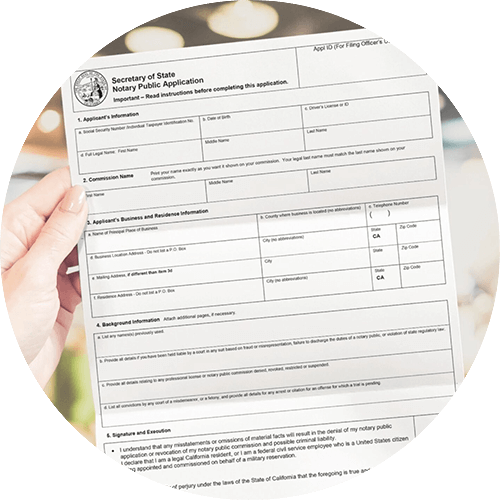




Most students begin with the CA Notary Class,
which comes with the Loan Signing Class Free.
Payment plans available with

Notary Class
Sign up for the Notary Class now and get the Loan Signing Class Free
Supplies
We offer everything for your Notary Journey. Stamps, Books, Forms, even E/O Insurance! Enroll in the class first to get started.
What the state actually requires
California is one of the stricter states. Before you can notarize anything you need to complete a 6-hour course from an education vendor approved by the Secretary of State, pass a written exam in person, clear a background check and file a $15,000 surety bond with your county clerk.
There is no way around the class. The state checks your Proof of Completion when you sit the exam, and it must come from an approved provider. We are approved provider #607272.
What it costs, start to finish
| Item | Typical cost | Paid to |
|---|---|---|
| 6-hour notary class | $79 | Your education vendor |
| State exam fee | $40 | Secretary of State |
| Live Scan fingerprinting | $60–$80 | Live Scan operator |
| $15,000 surety bond | $38–$50 | Bond company |
| Filing with county clerk | $20–$40 | Your county |
| Stamp and journal | $35–$60 | Supplier |
Realistic total: $270 to $350. Most of that is state and county fees rather than tuition.
How long it takes
The class itself is a single day if you want it to be. What stretches the timeline is everything after: exam results take around two to three weeks, and the Secretary of State takes a further four to six weeks once your background check clears.
Plan on two to three months from starting the class to holding your commission.
The exam, and why people fail it
The California notary exam is 45 multiple choice questions with a 70% pass mark. It is not a general knowledge test. It asks precise questions about maximum fees, acceptable identification, how to complete a jurat versus an acknowledgment, and what to record in your journal.
The people who struggle are usually the ones who read the handbook once and assume common sense will carry them. The people who pass take practice tests until the wording stops surprising them.
After you pass
- Live Scan. Electronic fingerprinting for your background check, at an approved location.
- Surety bond. A $15,000 bond, which protects the public rather than you.
- Oath and filing. You take your oath of office and file your bond with the county clerk, within 30 days of your commission start date.
- Supplies. Your official seal and a sequential journal. Both are required, and the seal can only be made once you have your Certificate of Authorization.
Miss the 30-day county filing window and your commission is void. It is the single most common administrative mistake new notaries make.
What notaries actually earn
California caps what you may charge per notarial act, so general notary work is steady rather than lucrative. The money is in loan signings, where a single appointment usually pays between $75 and $200 because you are handling a full mortgage package rather than one signature.
That is why our loan signing certification is included with the class rather than sold separately.
Renewing later
A California commission lasts four years. To renew you take a 3-hour refresher course, sit the exam again and file a new application before your current commission expires. Leave it too late and you are treated as a first-time applicant, which means the full 6-hour course again.